
How Long Does Driveway Sealcoating Take to Dry in NC?
May 20, 2026 · 9 min read
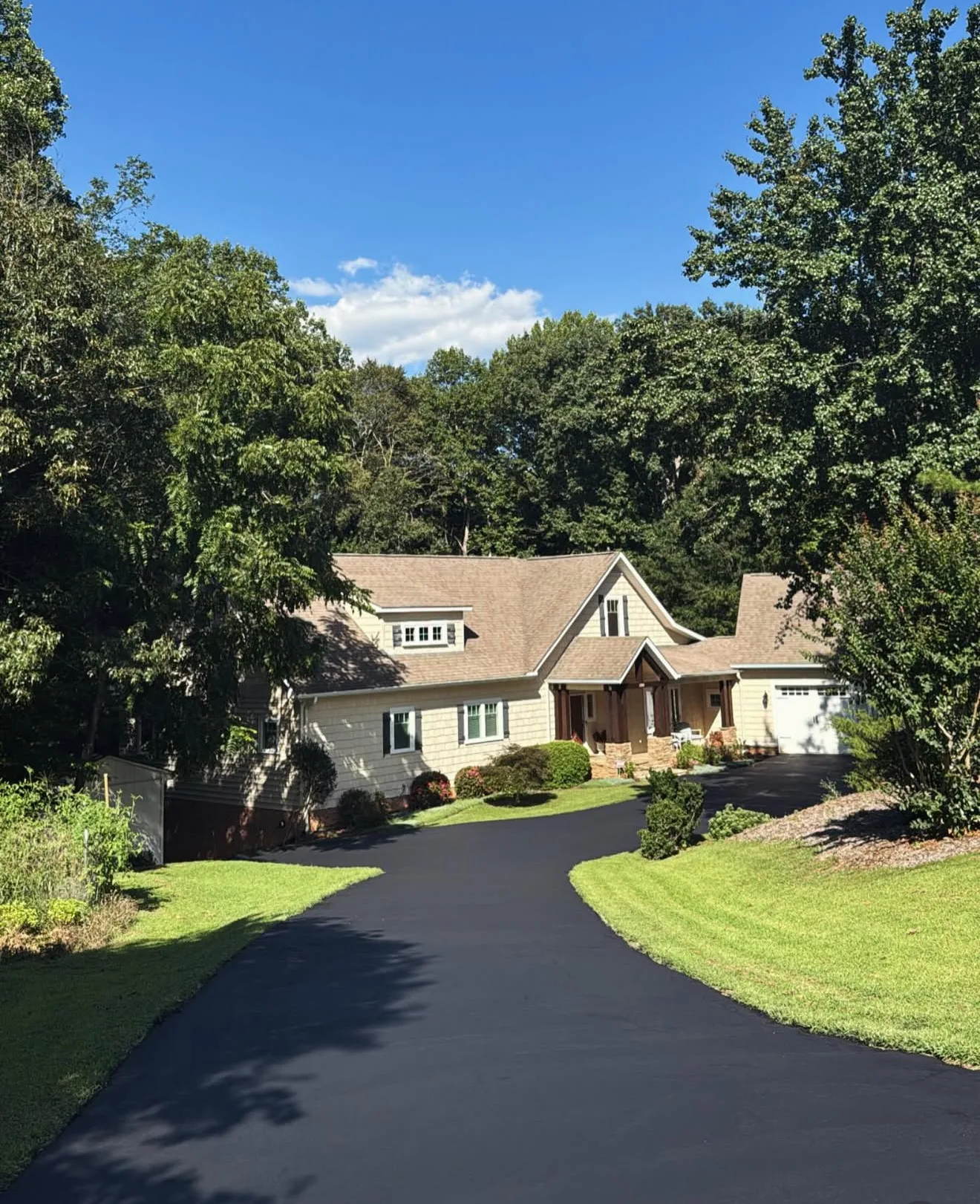
You finally scheduled the maintenance your property desperately needs. The crew arrived, cleaned the asphalt, and applied a thick, jet-black layer of protective sealer. Your driveway looks brand new, instantly boosting your home's curb appeal.
Now comes the hardest part: waiting.
Driving on a freshly sealed surface too early will instantly ruin the job. Your tires will strip the wet sealer straight off the asphalt, leaving permanent tire tracks and exposing the vulnerable rock underneath to the elements. You will have to pay a contractor to come back and fix the exact damage you just caused.
To protect your investment and ensure a flawless finish, you must understand how weather, humidity, and sunlight dictate the curing process in the Carolinas.
How long should you stay off a newly sealcoated driveway?
You should keep vehicles off a newly sealcoated driveway for 24 to 48 hours. However, you can safely walk on it after 4 to 8 hours, depending on Charlotte's humidity and direct sunlight.
There is a major difference between drying and curing. When a driveway is "dry," the top layer of the liquid has evaporated enough that it will not stick to your shoes. When a driveway is "cured," the moisture has completely evaporated from the entire thickness of the sealer, allowing it to harden into a tough, protective shell.
If you touch the surface and it feels dry, do not assume it can hold the weight of a 4,000-pound SUV. The chemical binders require a full 24 to 48 hours to lock into the microscopic pores of the asphalt.
Turning your steering wheel on a driveway that is only partially cured creates power-steering tears. The tires grip the partially hardened sealer and rip it right off the foundation. Wait the full 48 hours to be absolutely certain the surface is locked down.
Factors That Slow Down Sealcoat Curing Times (Humidity & Shade)
Charlotte's weather is notoriously unpredictable. The 24-to-48-hour rule is based on ideal conditions: 75 degrees, low humidity, and direct sunlight. If your property does not have those exact conditions, the curing clock slows down significantly.
Here are the three variables that actively fight the evaporation process:
If you notice that certain patches of your driveway still look slightly wet or glossy while the rest of the surface is a dull, matte black, stay off the pavement. The glossy areas hold trapped moisture.
Keep in mind, sealcoat is only a surface protectant. If your driveway has existing structural issues, sealer will not fix them. Before scheduling your coating, make sure to read our guide on whether you can apply driveway sealer over deep cracks to understand why you must handle structural repairs first.
High Humidity
Sealcoat is a water-based emulsion. For it to harden, the water inside the mix must evaporate into the air. During a muggy Charlotte summer day with 80% or 90% humidity, the air is already saturated with moisture. The water in the sealer simply has nowhere to go, drastically slowing down the drying time.
Heavy Tree Coverage
If your driveway sits under a thick canopy of oak or pine trees, it is shielded from direct UV rays and natural wind. Direct sunlight bakes the moisture out of the sealer. Without it, shaded sections of your driveway might take an extra 12 to 24 hours to cure compared to the sections sitting in the sun.
Overcast Weather and Cooler Temperatures
Evaporation requires heat. If your contractor applies the sealer on a cloudy, 60-degree October afternoon, the curing process will take significantly longer than on a 90-degree day in July.
What Happens If It Rains Right After Sealcoating?
This is the nightmare scenario for any homeowner. You schedule a driveway sealcoat, the crew finishes the job, and three hours later, a sudden Carolina thunderstorm rolls in.
Because standard sealcoat is water-based, it remains highly vulnerable until the water inside it completely evaporates. If heavy rain hits wet sealer, it washes the black emulsion straight off the asphalt. The sealer will run down your driveway, stain your concrete sidewalks, and wash into the neighborhood storm drains, leaving your asphalt completely unprotected.
Professional contractors monitor radar closely. If there is a high probability of rain within a 12-hour window, a reputable crew will postpone the job. It is always better to wait a week for clear skies than to risk washing away your entire investment.
If a surprise, un-forecasted shower does hit shortly after application, the damage depends entirely on how much of the sealer had already dried. A light drizzle on a partially dry driveway might only cause slight cosmetic streaking. A heavy downpour on fresh sealer will require a complete re-application once the asphalt dries out.
Service Recommendation
Ready to move from research to results? Explore our driveway sealcoating in Charlotte, NC services for Charlotte-area properties.
Related Reading
Continue learning with our Can You Apply Driveway Sealer Over Deep Cracks? .