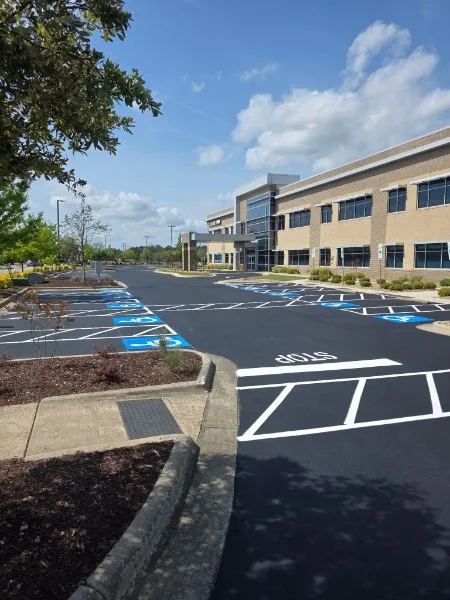
Why Charlotte Pavement Fails Faster Than Property Owners Expect
Charlotte's humid subtropical climate creates a destructive freeze-thaw cycle every winter. Water enters hairline cracks, freezes overnight, and expands with enough force to shatter the asphalt binder and undermine the stone subgrade under your lot or driveway.
Urban heat island effects along I-485 corridors and Uptown accelerate UV oxidation on unshaded retail lots. Gray, raveling surfaces can show up within two seasons if you skip sealcoating.
Piedmont clay holds moisture against subgrades under South End warehouses and nearby distribution aprons, which is why crack sealing before sealcoating is non-negotiable on commercial pavement. Summer heat then bakes open lots, stripping binder oils until the surface turns brittle and porous. Ignoring early wear pushes owners toward full-depth reconstruction that routinely costs many times more than preventative sealcoating and crack filling. We separate immediate liability work from seasonal preservation so your budget stays honest.